▪ Week in Review PRICING CULTURE | | | Issue 005 · Sunday, August 16, 2026 | | ▪ Opening Note The most valuable number in this issue is not on a price tag. It is 022/99R, engraved on the back of an F.P. Journe watch before the model officially existed. From there, the market offers three variations on the same argument: Michael Jordan turned a sealed Fleer box into a one-of-one with a pen; a Le Mans Talbot-Lago arrives in Monterey as the only competition-commissioned example of its design; and a celebrated $62 million charity sale carries a five-year-old asterisk. The objects could hardly be less alike. The pricing mechanism is remarkably consistent. Provenance creates the premium, documentation makes it believable, and settlement - where there is settlement - decides whether the headline deserves to survive. |
| ▪ The Big ReadThe Six Characters That Explain the Journe PremiumAn early Chronomètre à Résonance puts a precise number on the market's appetite for origin stories - and tests how much chronology is worth once rarity becomes mythology. By The Pricing Culture Desk |  Source: Pricing Culture Studio | The read
The Geneva sale will measure how much the Journe market pays for documented chronology when famous ownership is absent. The most valuable engraving in watches this autumn may be six characters on a caseback: 022/99R. They belong to a 38mm platinum F.P. Journe Chronomètre à Résonance made before the model's official debut, when the manufacture was young enough that its commercial history could still be counted on two hands. Phillips will offer it in Geneva in November at CHF500,000 to CHF1,000,000. The estimate buys a watch; the bidding will price an origin story. The machine behind that story is not decorative theatre. Two independent gear trains place their balance wheels close enough for tiny vibrations to pull them toward a shared rate, adapting a phenomenon studied by Antide Janvier and Abraham-Louis Breguet to the wrist. Journe launched the Chronomètre à Résonance in 2000 as the first wristwatch built around that principle. The appeal is unusually legible: two dials, two oscillators, one argument that precision can emerge from sympathy. The numbering makes this example more than merely early. The first 20 Résonance watches, numbered 001 through 020/00R, were reserved for supporters of Journe's Tourbillon Souverain subscription program, whose deposits helped finance the fledgling manufacture. Journe kept number 021 as a presentation watch. Number 022 therefore became the earliest commercially numbered Résonance, while 99R records that its case was ordered in 1999. Its owner chose 022 because it matched his birthday, an ordinary decision that aged into excellent provenance. It is also one of roughly ten known pre-production examples and has remained with that original owner for 27 years. The shallow caseback engraving, shiny pink-gold dial with silver-toned subdials, brass movement and first-market status create a stack of attributes that auction specialists usually have to assemble from several watches. Here they arrive in one object, fresh to market, with a clean chain of custody. Condition will still matter, but chronology is doing much of the financial work. Recent results show just how aggressively the market has been sorting early Journe material. Three historic Résonance watches sold through Phillips in 2026 for $13.9 million, $6.3 million and $3 million. Those prices do not make the CHF1 million high estimate automatic: subscription status, serial number, configuration and sale context are not interchangeable. They do, however, make a seven-figure estimate for the first commercially numbered example look less like auction-house exuberance than a deliberately inviting threshold. The comparison that best explains the premium is Francis Ford Coppola's FFC prototype. That watch sold in December 2025 for $10.755 million after an estimate above $1 million. Its value rested on a different kind of first: a unique mechanism born from Coppola asking whether a human hand could indicate the hours. The FFC carried famous ownership and singular invention; 022/99R carries the first chapter of a serial production story. One is celebrity provenance. The other is industrial archaeology with a balance wheel. This distinction matters because 'rare' is too blunt a word for the top of the market. A useful valuation ladder separates scarcity by manufacture, chronology, configuration, ownership and market freshness. Number 022 scores heavily on four of the five without relying on a famous wrist. It is rare because of when it was made, what it preserved and where it sits in the sequence - not because a catalogue has discovered an adjective. The risks are equally specific. Phillips is both the seller's agent and the source of much of the historical framing, so the estimate should not be mistaken for independent price discovery. A small population of exceptional Journe buyers can produce spectacular results without lifting every Résonance beneath them. And a trophy result can make a market look deeper than it is. November will reveal the number of determined bidders, not merely the number on the invoice. Still, 022/99R offers the cleanest possible test of the provenance premium. If it clears comfortably above estimate, the market will have paid for documented chronology almost as readily as it pays for unique ownership. If it stalls, the result will draw a useful boundary between the mythology of the beginning and the cash value of being there. Either way, six characters will have done more analytical work than six pages of auction copy. Sources & Notes: [1] Phillips · [2] Phillips Coppola result · [3] Forbes · [4] Pricing Culture |
| | ▪ Secondary-Market Price Changes | | Change in tracked secondary-market list prices. Positive figures mean asking prices rose; negative figures mean they fell. | | Watches | List prices fell over 90 days |
7 days
+0.09% | 30 days
+0.04% | 90 days
-0.2% |
| | Cars | List prices rose over 90 days |
7 days
-0.02% | 30 days
+0.4% | 90 days
+0.3% |
| | Handbags | List prices fell over 90 days |
7 days
-0.2% | 30 days
-0.4% | 90 days
-0.2% |
| Pricing Culture read
Across leading secondary marketplaces, average listed asking prices over the latest seven-day window moved as follows: Watches rose 0.1%, Cars were broadly unchanged at -0.0%, and Handbags fell 0.2%. These are changes in seller asking prices, not completed-sale returns. Cars led the 90-day window at +0.3%, while Handbags trailed at -0.2%. The 0.5-point gap is the cleaner measure of category rotation; 2 of 3 categories were positive over the last 30 days. |
Source: Pricing Culture Analytics |
| ▪ CollectiblesMichael Jordan Turned a Sealed Box Into a One-of-OneA $1.48 million Fleer box shows how authentication, controlled access and a well-placed inscription can manufacture new scarcity from an old object. |  Source: Pricing Culture Studio | The read
The premium belongs to a newly authenticated one-of-one object, not to the expected card value inside the sealed box. Michael Jordan did not need to open the box. He signed the outside, added the words 'Rookie Card Box 1 of 1,' and turned 36 unopened packs of 1986-87 Fleer basketball cards into a new object. The box sold on eBay for $1.48 million. Somewhere inside may be a Jordan rookie card; the premium sat on the acrylic case, where certainty was easier to authenticate than chance. Upper Deck organized the sale as one of 12 authenticated Jordan lots and paired it with a new Goodwin Champions redemption program built around individually signed vintage Fleer packs. Ten percent of the box proceeds was designated for Boys & Girls Clubs of America. The structure is unusually neat: vintage supply provides the cultural memory, Jordan supplies controlled access, Upper Deck supplies authentication, and a modern distribution channel captures the moment those ingredients become newly scarce. The arithmetic makes clear what changed. A 1986-87 Fleer box contains 36 packs, but the buyer did not pay $41,111 per pack for an attractive rip. Opening it would destroy the one-of-one inscription as a coherent object. The box is therefore worth more closed than the expected value of its contents, a reversal of the familiar sealed-wax logic in which mystery supports price. Here, the valuable thing is not what might be found. It is what Jordan definitively touched. Card comparables sharpen the distinction. An unsigned Jordan Fleer rookie reached $840,000 in 2021. An autographed example sold for $2.5 million at Joopiter in 2025, then another privately signed example changed hands for $2.7 million later that year. Those are individual cards with grading populations and condition risk. The $1.48 million box occupies a different category: a container promoted into memorabilia, with a single inscription creating its own population report. That transformation depends on an unusually controlled signature market. Jordan's long relationship with Upper Deck has constrained the supply of authenticated autographs, especially on vintage Fleer material produced before that partnership existed. A signature added decades later can be dismissed as aftermarket in less orderly markets. Here the manufacturer, athlete and authentication program converge, giving the later intervention institutional provenance rather than the air of a hotel-lobby Sharpie. The venue matters too. eBay supplied global reach and familiar bidding mechanics; Joopiter supplied theatrical curation for the $2.5 million rookie. Neither is a traditional sports auction house, yet both produced prices that now sit in the comparison set. The infrastructure for trophy collectibles is becoming less venue-dependent as long as payment, authentication and publicity travel together. Liquidity follows trust, not mahogany. The useful record for this object is therefore more detailed than '$1.48 million Jordan sale.' It should preserve the sealed status, the exact inscription, Upper Deck authentication, auction channel, charitable allocation and whether the price includes any premium. Strip those fields away and the result becomes a misleading comparable for ordinary Fleer boxes. Keep them, and the transaction shows something more interesting: controlled access can create primary-market scarcity inside a 40-year-old secondary-market object. Sources & Notes: [1] Upper Deck · [2] The New York Times · [3] ESPN · [4] Pricing Culture |
| | ▪ The Auction Room | | What cleared, what sold and where the week's value concentrated. | $182.4M Total sales | 58.0% Sell-through by lot | 95.3% Weekly value in the top sale |
| Pricing Culture read
5 tracked auctions closed with $182.4M in sales. The Monterey Auction 2026 supplied 95.3% of the week's value. Across the full weekly tape, 1,515 of 2,614 offered lots sold, a 58.0% weighted sell-through rate. 11 more tracked auctions were underway at the cutoff. | | Sales closed in the latest week | | RM Sotheby's · The Monterey Auction 2026 | $173.9M |
118 of 199 lots sold · 59.3% sell-through · $1.5M average sold lot · 95.3% of weekly tracked value | | Goldin · 2026 Summer TCG Elite Auction | $6.0M |
498 of 1,008 lots sold · 49.4% sell-through · $12.1K average sold lot · 3.3% of weekly tracked value | | Goldin · 2026 Summer Game Used Memorabilia Auction | $1.3M |
251 of 595 lots sold · 42.2% sell-through · $5.2K average sold lot · 0.7% of weekly tracked value | | Tracked auction results in the latest completed week: $182.4M across 5 auctions. |
Source: Pricing Culture Analytics | ▪ Auction Market ReportsThe Quarter, Put on One PageAvailable with Pricing Culture Pro Pricing Culture's Auction Market Reports bring monthly, quarterly and annual results to life with interactive data and insights. The complete Q2 sample covers 354 auctions, 68,842 lots and $3.36 billion in sales across seven houses and nine categories. Compare market share, sell-through, lot economics and concentration without working through hundreds of catalogues, results pages and currency conversions. | $3.36B Premium-inclusive Q2 sales | 354 Auctions reviewed | 68,842 Lots offered |
Source: Pricing Culture Analytics | Inside the report | • | Monthly, auction-house and category market shares | | • | Sell-through, sold-lot economics and concentration analysis | | • | Top sales, auction calendar, Q3 watchpoints, methodology and linked sources |
| |
|
| ▪ Collector CarsThe Talbot-Lago That Has to Be Two Things at OnceThe only Teardrop Coupe commissioned for competition reaches Monterey with an $8 million estimate and a valuation problem: is it a race car, a design object, or both? |  Source: Pricing Culture Studio | The read
The Talbot-Lago's value rests on whether one chassis can carry separate premiums for design, competition history and documented uniqueness. A great collector car usually wins one argument at a time. It is beautiful, or fast, or historically important. The Talbot-Lago arriving at RM Sotheby's Monterey sale is inconveniently overqualified. Its Figoni et Falaschi coachwork gives it the silhouette of a concours trophy; its 1939 Le Mans entry gives it the paperwork of a competition car. The $8 million estimate asks bidders to pay for both stories without discounting either one. That dual identity begins with scarcity. The car is described as the only Teardrop Coupe known to have been commissioned specifically for competition. Philippe Régnier de Massa and Norbert-Jean Mahé took it to Le Mans, where it was running ninth before retiring. Plenty of old racing cars have elegant bodies, and plenty of elegant cars acquired racing numbers later. This one was intended to do the work from the start. Its body matters because the Teardrop is one of the rare automobiles whose shape escaped the car market and entered the design canon. Figoni et Falaschi wrapped the T150-C SS chassis in long fenders, a narrow cabin and a roofline that appears to have been pulled rearward by speed. That visual fame broadens the bidding pool beyond motorsport specialists, but it also makes restoration history unusually important: the premium depends on the continuity of the object everyone recognizes. The racing record adds a different kind of value. Le Mans participation is verifiable, finite and portable across generations of collectors. It can survive changes in color fashion, concours taste and enthusiasm for a particular marque. Yet a retirement is not a victory, and the market must decide how much to pay for documented participation when the car's design may be doing more of the emotional work. The history file and Oscar Davis provenance help hold those two narratives together. For a one-off or near-one-off car, documents are not supporting material; they are part of the asset. They establish which body sat on which chassis, when it raced, what changed, and why the current object deserves to inherit the story. Without that chain, uniqueness becomes a catalogue adjective. With it, uniqueness becomes something a bidder can underwrite. The result will be useful even if it misses the estimate. A strong price would show that the top of the pre-war market still rewards objects able to cross from competition history into sculptural design. A weak one would suggest that buyers now demand a clearer hierarchy: race victories for racing money, untouched originality for preservation money, and beauty at a price that leaves room for ambiguity. Either way, this Talbot-Lago is less a referendum on old cars than a test of how many premiums one chassis can carry. Sources & Notes: [1] Robb Report · [2] Classic Driver · [3] Pricing Culture |
| ▪ Art MarketThe $62 Million Result That Still Has Not ArrivedSacha Jafri's charity sale exposes the distance between a winning bid, a settled transaction and money reaching its promised destination. | 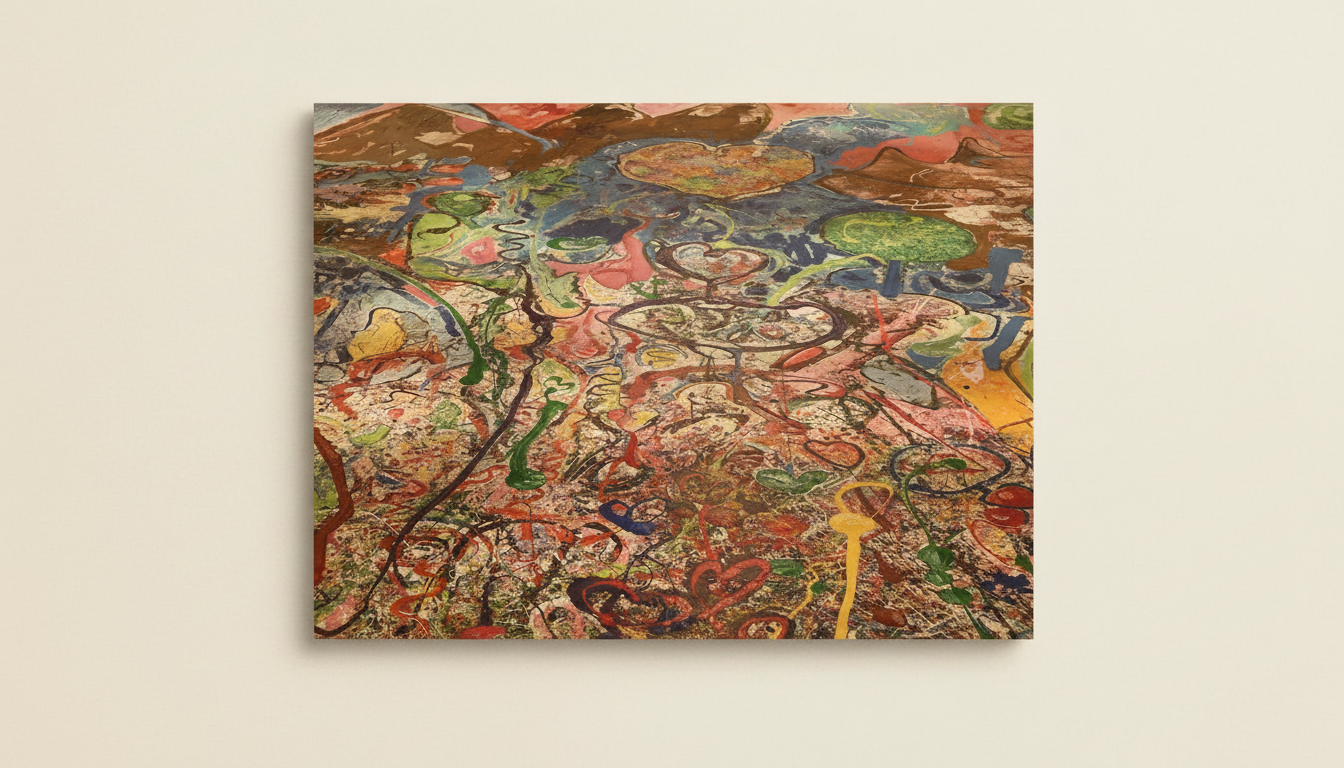 Source: Pricing Culture Studio | The read
Auction records should distinguish announced prices from settled proceeds, especially when the economic purpose of a sale remains unfulfilled. In March 2021, a hotel ballroom in Dubai briefly contained the world's largest canvas, a buyer with a plan to keep it whole, and a $62 million promise to children. Sacha Jafri's The Journey of Humanity had been cut into 70 sections for a series of charity sales. Andre Abdoune bought all of them at once, doubling the original $30 million fundraising target. Five years later, the promised proceeds have yet to reach the charities. The scale helped make the event irresistible. Jafri spent months painting across more than 17,000 square feet at Atlantis, The Palm, using children's submissions from around the world as part of the project. The announced beneficiaries included UNICEF, UNESCO, the Global Gift Foundation and Dubai Cares. The sale was presented as both an auction record and an act of efficient philanthropy: one buyer, one monumental work, one spectacular number. That number now requires a footnote large enough to stand beside the painting. The public record preserves a $62 million sale, but the charitable outcome remains unpaid. This is not a semantic distinction. A winning bid creates an obligation; settlement turns that obligation into cash; distribution completes the stated purpose. Collapsing all three events into 'sold for $62 million' makes a receivable look like proceeds. The original payment plan was unusually relevant from the start. Contemporary coverage described a sizeable deposit followed by three instalments over six weeks. A staged payment is not inherently weak, especially at this scale, but it creates dates on which completion can be tested. The unresolved balance shows why auction databases need more than a hammer field when a sale is private, bespoke or linked to a charitable promise. A robust transaction record would separate announced price, buyer's premium, deposit received, balance due, settlement date and beneficiary receipt. For an ordinary commercial sale, some of those fields remain confidential. For a charity auction whose public appeal rests on impact, the final field is the economic point. Without it, rankings of living artists and lists of charitable achievements can remain numerically correct while describing an event that never financially finished. The concentration that made the evening dramatic also made the outcome fragile. Selling all 70 sections to one buyer preserved the artwork and created a cleaner cultural object, but it replaced a diversified pool of payments with one counterparty. The painting stayed whole; the payment risk did too. That trade-off is easy to admire in a ballroom and harder to ignore on an ageing ledger. The lasting market insight is not a verdict on the work or the buyer. It is a classification problem. The Journey of Humanity should be recorded as a $62 million announced auction result with unpaid charitable proceeds, not as a fully settled $62 million transaction. Cultural markets thrive on memorable numbers. Serious records have to remember what happened after the number appeared. Sources & Notes: [1] ARTnews · [2] Dubai Media Office · [3] The Art Newspaper · [4] Pricing Culture |
| | ▪ On the Wires | Secondary Watch Market Surges to $10.5 Billion in H1 2026 Pricing Culture summary
The secondary watch market reached $10.5 billion in the first half of 2026, representing a 37.2% increase in sold value alongside a 19.3% rise in the median sale price to $5,900. Independent watch brands are emerging as a fast-moving asset class, growing 89% year-on-year to outpace major luxury conglomerates by more than triple their rate. | Dennis Rodman 1997 Precious Metal Gems Red Card Sets $52,800 Record Pricing Culture summary
A Dennis Rodman 1997 Metal Universe Precious Metal Gems Red Parallel card graded BGS 8.5 sold for an all-time high of $52,800 on August 9 via Fanatics Weekly. The transaction represents a 106% increase in value over a previous September 2024 sale, highlighting the intense market demand for scarce, condition-sensitive 1990s basketball inserts. | Basquiat and Calleja Artworks Entangled in $497m Vancouver Real Estate Collapse Pricing Culture summary
A lawsuit linked to the collapse of developer Coromandel Properties alleges that chief executive Jerry Zhong used C$6.9m in art as collateral for a bank loan while the company was in financial distress, though Zhong denies all allegations of conspiracy, embezzlement, or misappropriation. The case highlights how high-value contemporary art is increasingly leveraged as financial collateral within complex, cross-border real estate investment structures. | Global Auction Sales Surge 70% in First Half of 2026 to $6.8bn Pricing Culture summary
Global auction sales at Christie's, Sotheby's, and Phillips rose 70% year-on-year to $6.8 billion in the first half of 2026, marking the best first-half performance since 2022. The recovery is expanding beyond top-tier trophy lots into the market's middle core, driven by rising volumes, record online participation, and stronger sell-through rates. |
| | ▪ One More Thing Founder's Note Please Keep the Notes ComingOver the past few months, many of you have taken the time to send notes, corrections and requests. I appreciate every one of them. They have helped sharpen what Pricing Culture should do best: make fragmented markets easier to see and compare. We are excited to keep building reporting and tools for readers who follow art, collectibles and other cultural assets. Please reply and tell me what would make the Auction Market Reports more useful: the houses, categories, comparisons or questions you would like us to examine next. B.
@pricingculture | PRICING CULTURE Reporting and data for cultural-asset markets Pricing Culture covers the markets for cultural assets: auctions, secondary-market moves, brand signals, and the stories shaping value, provenance, and trade. We organize a fragmented market with reporting, data, and disciplined source work. Front Page · Secondary Markets · The Wire · Auction Rooms Pricing Culture Inc. · Week in Review |
|
